


India, Madhya Pradesh, probably Gwalior region
10th-11th Century
Sandstone
H 41,5 cm x W40 cm x D21 cm
Provenance: Collection Simon Ray 2008, Collection the late Bruno Cooper 2008-2012, thence by descent.
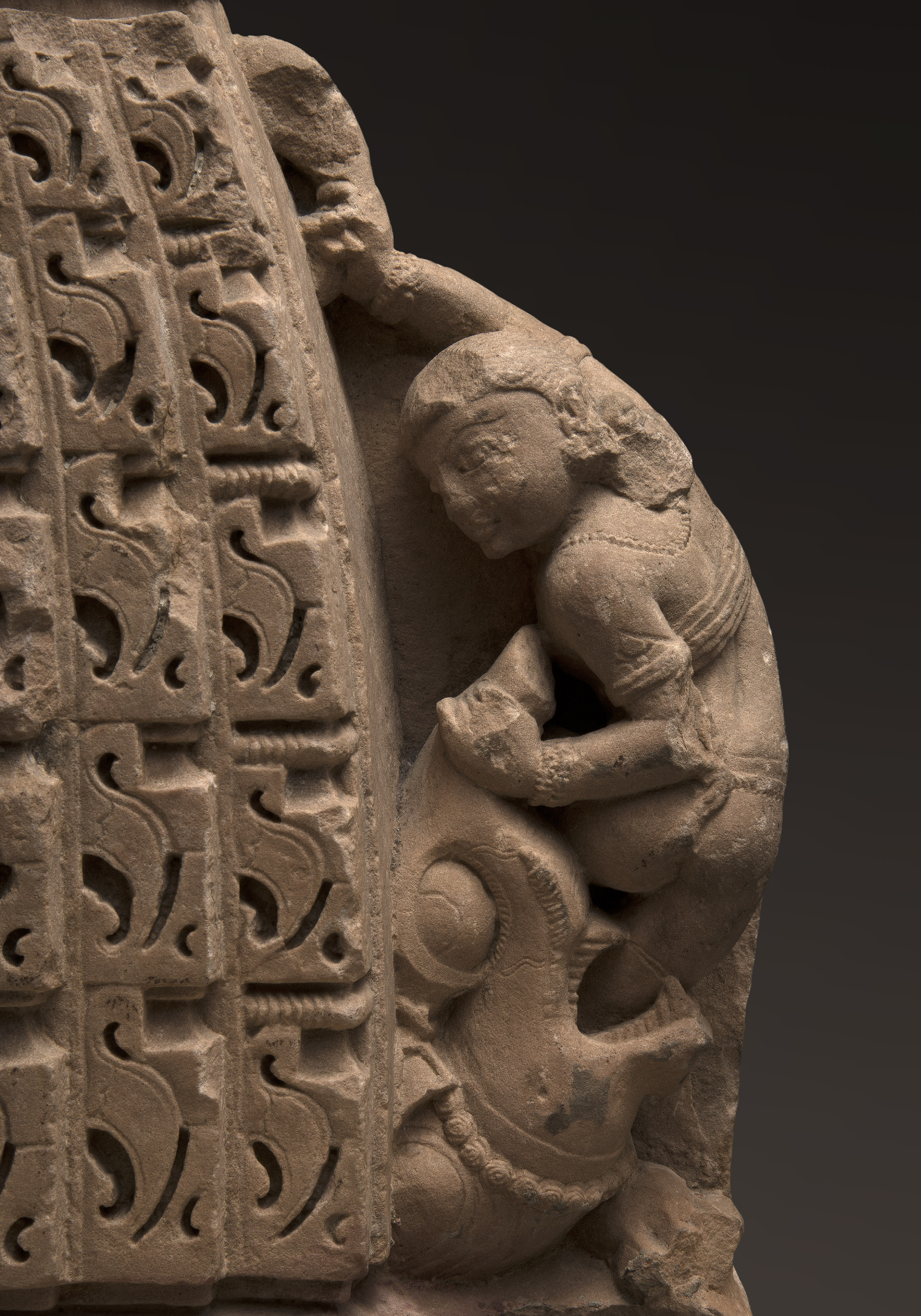
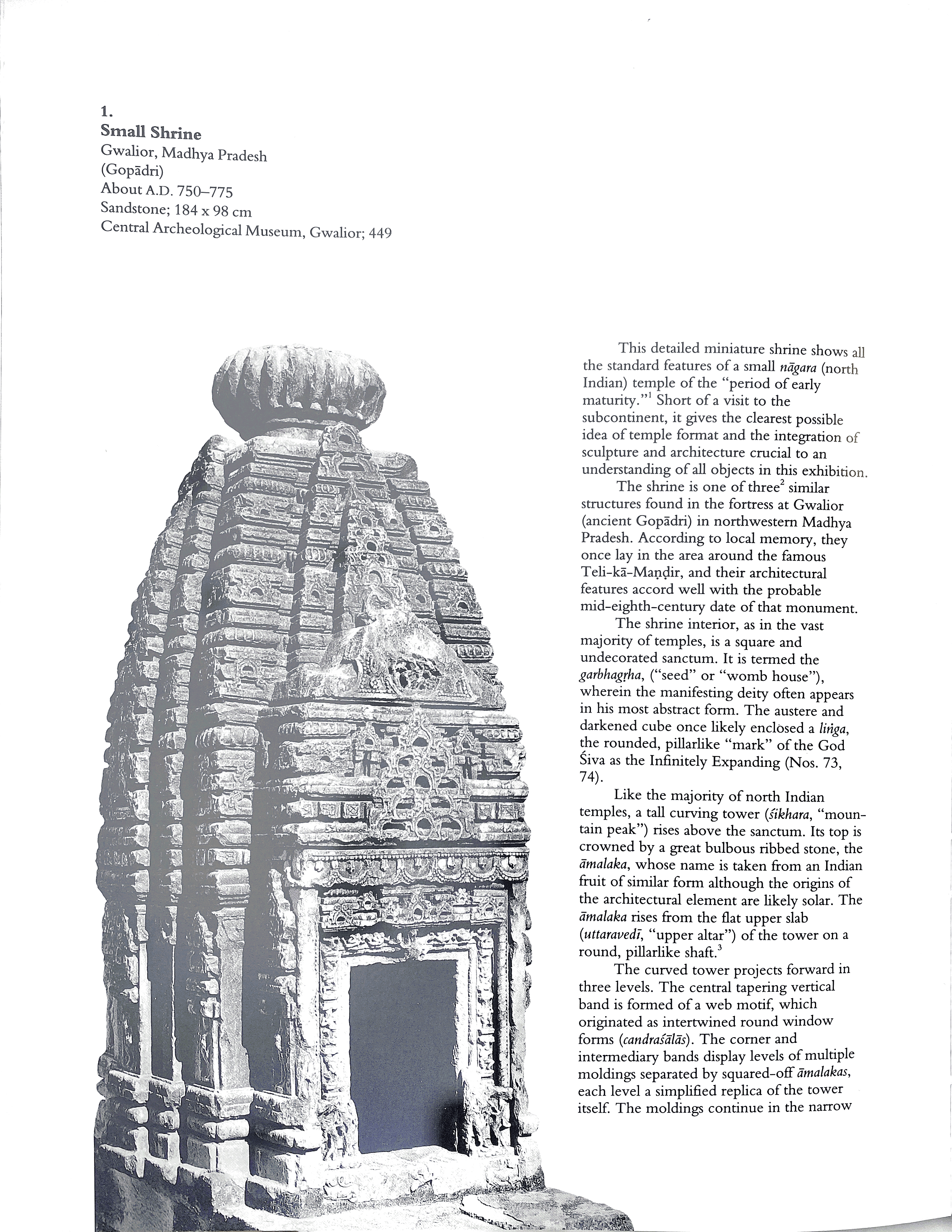
This sandstone architectural fragment depicts a miniature shikhara, richly carved with foliate ornamentation, symbolizing a North Indian temple tower. The pink glow in the sandstone suggests the region of Gwalior in the north of Madhya Pradesh as the place of origin.
A female attendant, possibly a river goddess or apsara, and a male musician emerge from the open mouth of a pair of makaras. The male figure, possibly a gandharva, with broader shoulders and detailed ornamentation is playing a musical instrument, while the beautifully adorned and near naked goddess or apsara is caught in fluid pose of devotion or dance.
Makaras are mythical aquatic creatures with the body of a crocodile, the head of a lion and the trunk of an elephant. They are often seen at the entrance of the temple and considered by the Hindu’s to be auspicious and purifying by their association with water. This fragment was probably located above a niche on a temple façade. It has been skilfully carved, creating depth and dynamism.
The combination of two lively divine figures emerging gracefully from the mouth of the makara portrays an image of pronounced sensuality and ensures a protective auspiciousness for the small shrine.
References:
A similar sandstone miniature shrine from the same region, from the earlier date of 8th century, can be seen in Gods, Guardians and Lovers, Temple sculptures from North India A.D. 700-1200, Vishaka N.Desai, the Asia Society Galleries, New York, 1993, p.142-144.


Privacy Document | Reset Cookieconsent
Website by Phobos & Actor