


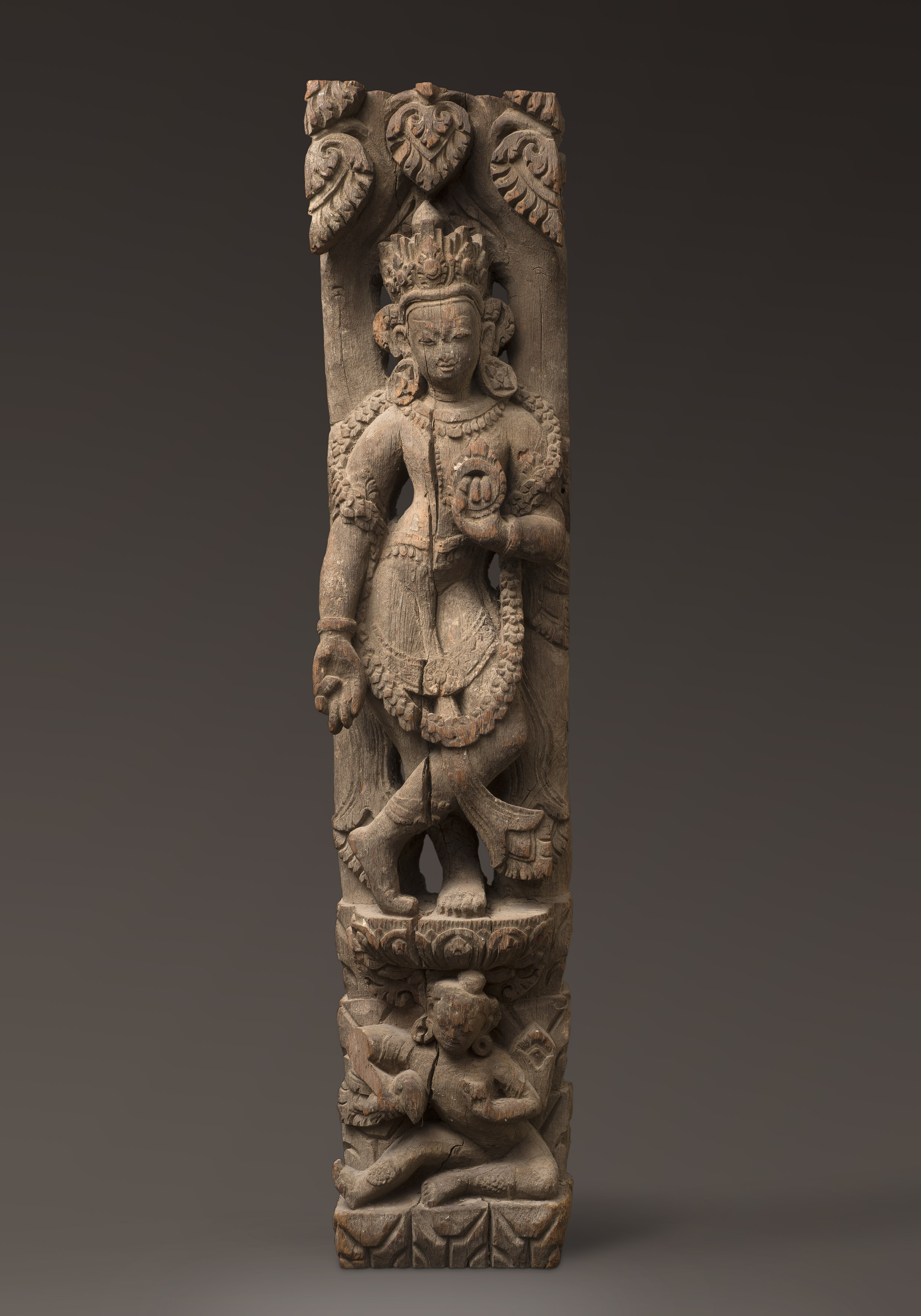
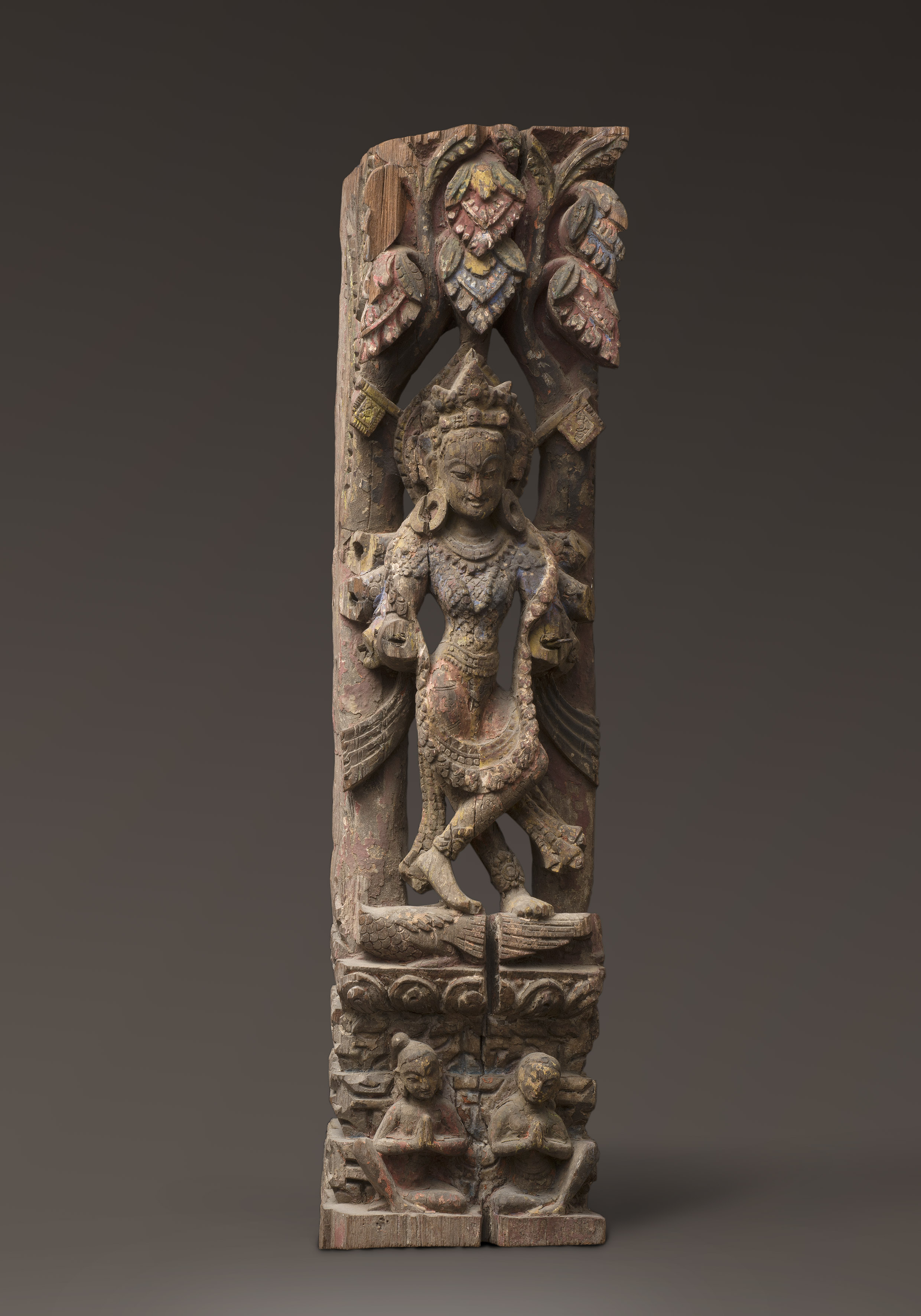
a.Temple strut
Wood
Late Malla period, circa 17 th century
81x16x10cm
b.Temple strut
Wood with pigments
Late Malla period, circa 17 th century
67x17x11cm
Private Collection New York acquired 1980
Documentation: Art of Nepal, Pal Pratapaditya, 1985, Los Angeles County Museum, p.138
These two temple structures would have served as a strut supporting the overhanging roof in the Hindu temples of the Kathmandu region. The first strut may represent Vishnu, he wears the lotus bud and rosary. The second strut may represent Mahesvari or Chamunda, one of the Mother goddesses. She wears a garland of skulls, she has eight arms. She normally wears the following attributes: a drum, a trident, a sword, a snake, skull-mace, thunderbolt, a severed head and drinking vessel or skull-cup filled with blood. She wears a jata mukuta, a headdress formed of piled, matted hair tied with snakes or skull ornaments. Flags stick out of each side of her head, above which are the flowers of the tree and green foliage.


Privacy Document | Reset Cookieconsent
Website by Phobos & Actor